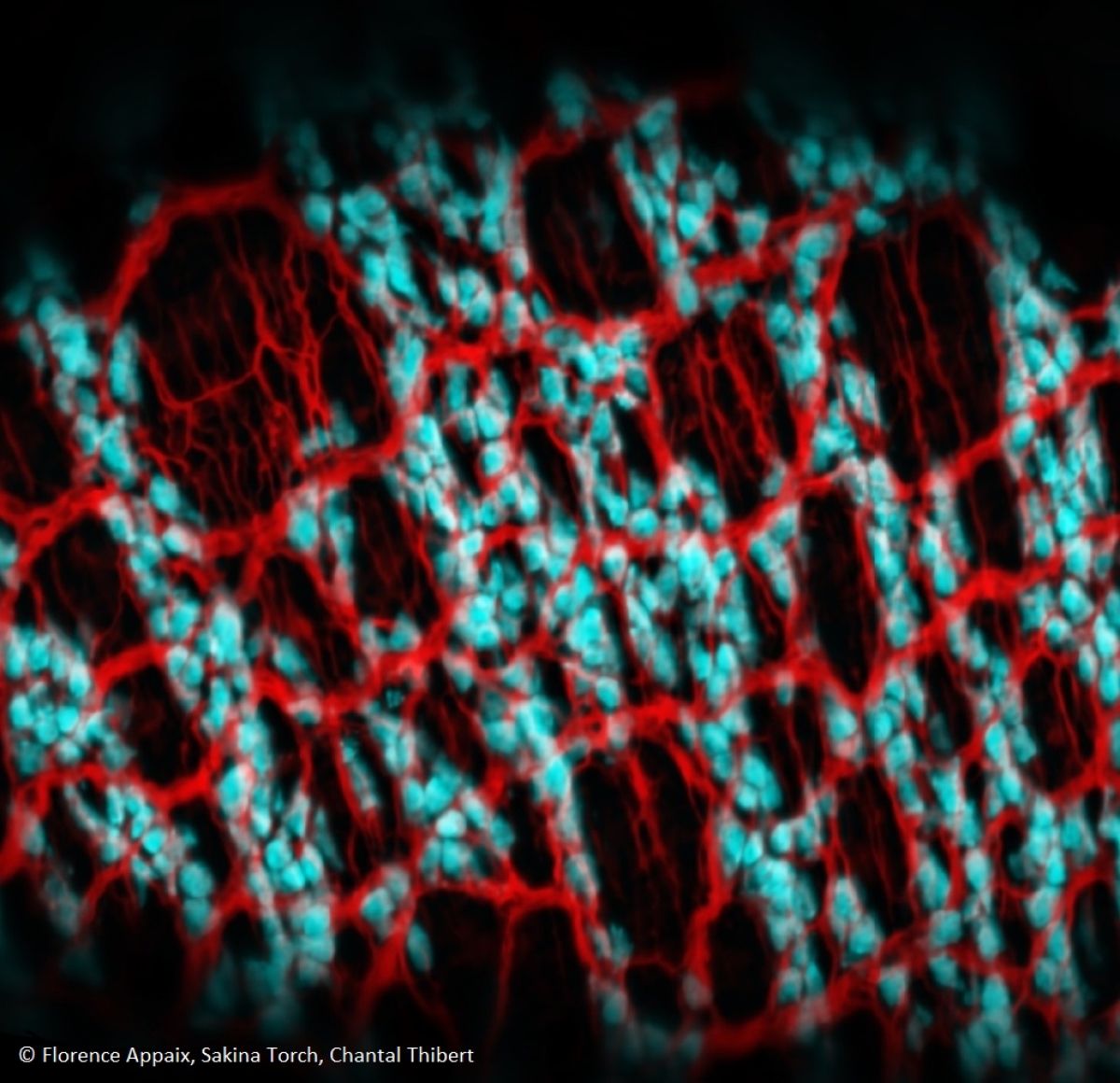
LKB1, an energy sensor that guides the development of the enteric nervous system
14 September 2026
The enteric nervous system, often referred to as the “second brain,” autonomously controls the functions of the digestive tract. A study published in Genes & Development reveals that the LKB1 protein plays a key role in the formation of this network by coordinating the differentiation of neurons and glial cells from their embryonic stem cells. This research opens up new avenues for understanding certain congenital diseases and digestive disorders linked to dysfunction of the enteric nervous system.
LKB1, an energy regulator essential for the formation of the "second brain"
The enteric nervous system consists of more than 500 million neurons associated with glial cells that play a role far beyond mere support. They help maintain the intestinal barrier, regulate local immune responses, and control the movements that allow food to progress through the digestive tract. These two cell types originate from the same pool of neural crest-derived stem cells during embryonic development.
While the genetic programs that govern this process are now relatively well understood, the influence of cellular metabolism on this stage of development remained largely unexplored. In a study published in the journal Genes & Development, scientists focused on LKB1, a protein that acts as a sensor of the cells’ energy status.
Using a mouse model in which the Lkb1 gene is specifically knocked out in the stem cells that give rise to the enteric nervous system, they demonstrated that the absence of this protein profoundly disrupts the formation of the intestinal nervous network. Neurons fail to differentiate, while glial cells differentiate but gradually degenerate, compromising the integrity of the digestive tissue.
Two distinct mechanisms for neurons and glial cells
Analyses reveal that the loss of LKB1 leads to a significant increase in oxidative stress in the enteric nervous system. This causes DNA damage and activates the p53 protein, a major player in the cellular stress response, leading to the death of many cells.
Scientists have shown, however, that neurons and glial cells do not respond in the same way to this disruption. Inhibiting p53 preserves some of the glial cells but does not restore neuronal differentiation. This observation demonstrates that LKB1 controls the fate of these two cell populations through mechanisms that are at least partially distinct. More than just a cell survival factor, LKB1 thus appears to be a true metabolic checkpoint that directs neuro-glial fate during development.
Toward a better understanding of diseases of the enteric nervous system
The abnormalities observed in mice show similarities to certain human neurocristopathies, notably Hirschsprung’s disease and certain forms of Waardenburg syndrome, which result from abnormal development of cells derived from the neural crest. Although no LKB1 mutations have been identified in these patients, this research suggests that a dysfunction of this metabolic pathway could contribute to these conditions or to other enteric neurogliopathies.
Beyond these congenital disorders, the study highlights the central role of enteric glial cells in maintaining digestive health. Their ability to adapt in the face of stress and inflammation makes them promising candidates for future regenerative medicine approaches. A better understanding of the molecular mechanisms that control their development and maintenance could thus open up new therapeutic avenues for diseases of the enteric nervous system.
Article originally published by the CNRS
Bibliography:
LKB1 functions as a checkpoint for neuronal-glial balance during enteric nervous system development
Lucas A, Appaix F, Allard J, Mével-Aliset M, Radu AG, Fauvelle F, Favier B, Grichine A, Maurer J, Hainaut P, Attardi L, Billaud M, Torch S, Thibert C.
Genes Dev. Published in Advance June 25, 2026, doi:10.1101/gad.353358.125
Contacts:
Chantal Thibert, CRHC CNRS, IAB
Sakina Torch, MCU-HC UGA, IAB